Finding the Best Window Seats on European Night Trains

Most travelers assume that any window seat on a European night train offers a front-row view of the scenery, but that's a mistake. Depending on the carriage type—be it a couchette, a sleeper cabin, or a standard seat—your view might be blocked by heavy curtains, structural pillars, or even the back of a bunk. Choosing the wrong seat means spending hours staring at a dark ceiling or a blank wall instead of the moonlight reflecting off the Alps or the rolling plains of Eastern Europe. This guide explains how to identify the best seating positions based on train configurations and technical layouts.
Which Side of the Train Has the Best Views?
The best side of the train depends entirely on the direction of travel and the specific route's geography. If you're traveling north-to-south through the Alps, the western side often catches the sunset, while the eastern side might offer better views of the sunrise. You can't predict this without looking at a map of the rail line.
Before you book, check the route map on the ÖBB Nightjet website. They often provide specific route details. If you're heading from Paris to Berlin, the view is mostly flat farmland. But if you're on a route through the mountains, the side of the train matters immensely. Don't just guess—look at the topography of the track.
One thing to remember: even the "best" side can be ruined by a bad seat assignment. A seat positioned directly against a structural pillar will offer zero visibility. It's a common frustration for people who plan their trips meticulously but forget to account for the physical layout of the carriage.
Understanding Carriage Types
You aren't just booking a seat; you're booking a specific type of accommodation. This changes everything regarding your view.
- Standard Seats: Best for short hops, but the windows are often smaller and higher up.
- Couchettes: These are bunk-style beds in a shared compartment. The views are usually decent, but you're often looking up at a ceiling.
- Sleeper Cabins: The gold standard. These offer more privacy and often have larger windows that allow for better light.
If you're traveling in a sleeper cabin, you'll likely have a window, but it might be a single pane that doesn't open. This can make the space feel cramped. I always recommend bringing a small flashlight or a dedicated light source—it's much more useful than trying to rely on the dim cabin light. If you're worried about your tech dying during the trip, remember to pack a lightweight power bank for long journeys.
How Do I Avoid a Bad Window Seat?
To avoid a bad window seat, you must look for seat numbers that are not adjacent to the door or the toilet compartment. The areas near the ends of the carriage are often the most problematic for visibility and comfort.
Most European train manufacturers, like Siemens or Talgo, use standardized layouts, but there are quirks. For instance, some older carriages have "blind" windows—windows that look like they should show a view but are actually solid panels or obscured by internal machinery. These are common in older sleeper models. It’s a bummer when you've been looking forward to the view all day.
Here is a quick breakdown of what to look for when selecting your seat on a seating chart:
| Seat Type | View Quality | Risk Factor |
|---|---|---|
| Single Sleeper | Excellent | High price, but rarely a bad view. |
| Double/Triple Couchette | Good | Middle seats often have obstructed views. |
| Standard Seating | Variable | Pillars and doors can block the window. |
| Lower Bunk (Couchette) | High | Great for seeing out, but hard to get up. |
A pro tip: if you are booking a seat in a compartment, try to get the middle seat. While the window is technically yours, the person in the seat next to you might be leaning against it. It's a small detail, but it matters if you want to actually see the scenery.
The "Pillar" Problem
On many long-distance trains, there is a vertical structural beam between windows to support the roof. If your seat is assigned right next to this, your "window view" is essentially a piece of metal. When you're looking at a seating map online, look for the gaps between the numbers. If a seat number is tucked right against a divider, skip it.
Is It Worth Upgrading to a Private Sleeper?
Upgrading to a private sleeper is worth it if you prioritize uninterrupted views and a sense of space over the lowest possible price. While couchettes are much cheaper, the constant movement of other passengers can make it hard to enjoy the scenery.
In a private sleeper, you have much more control over the environment. You can pull the curtains, adjust the light, and actually lean against the window without someone's elbow in your space. If you're traveling through high-scenery areas like the Swiss Alps, the difference is massive. I've spent many nights watching the stars through a sleeper window, and it's a much more serene experience than the cramped feeling of a 6-berth couchette. If you want to see how to maximize your experience in mountainous regions, check out my guide on sleeping through the Swiss Alps on the Glacier Express.
The cost is the main deterrent. Sleeper cabins can be significantly more expensive than standard seating or even couchettes. However, you aren't just paying for a bed; you're paying for the view and the privacy that comes with it. If you're on a budget, stick to the couchette, but try to snag a lower bunk. The lower bunk is generally closer to the window and less likely to be obstructed by the top bunk's frame.
Checking the Seat Map Before You Pay
Most booking engines, including the official Deutsche Bahn app, show a basic seating layout. It won't tell you if there's a pillar in the way, but it will show you the spacing. If the seat looks isolated, it's a good sign. If it looks crowded, expect a view that's heavily interrupted by other people's heads or luggage.
Don't forget to check the orientation of the seats. In many European trains, seats can be rotated. If you're in a compartment, you might be facing away from the window for the entire trip if the seats are turned toward the middle. This is a common mistake- I've been there, sitting in a beautiful seat only to realize I'm facing a blank wall because the seat was turned around.
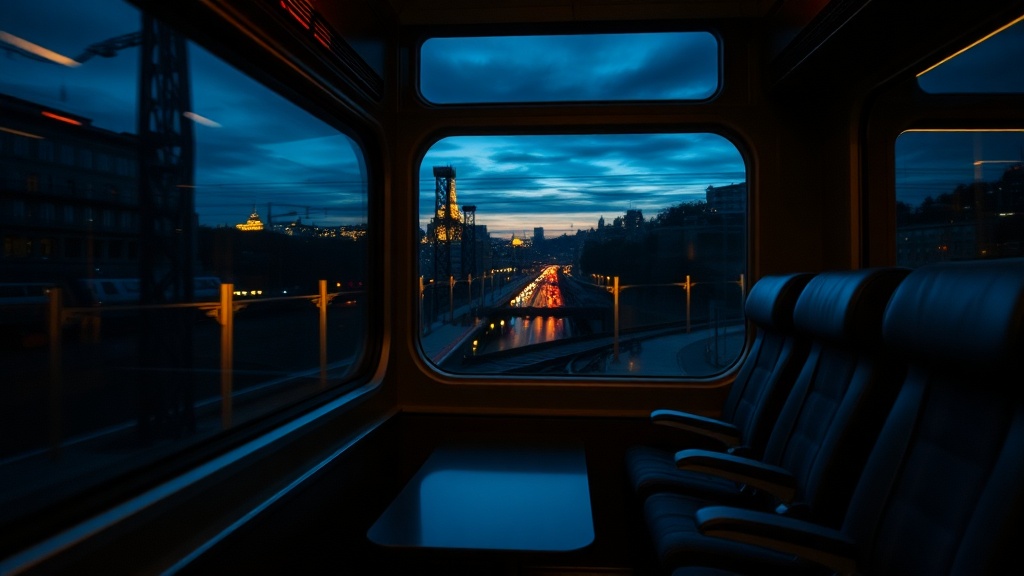
One last thing to keep in mind: light levels. If you're traveling through a dark region at night, the reflection of the interior lights on the window can actually make it harder to see outside. This is why having a dedicated, dimmable light or even just a well-placed phone flashlight can help you see the landscape more clearly without blowing out your night vision.