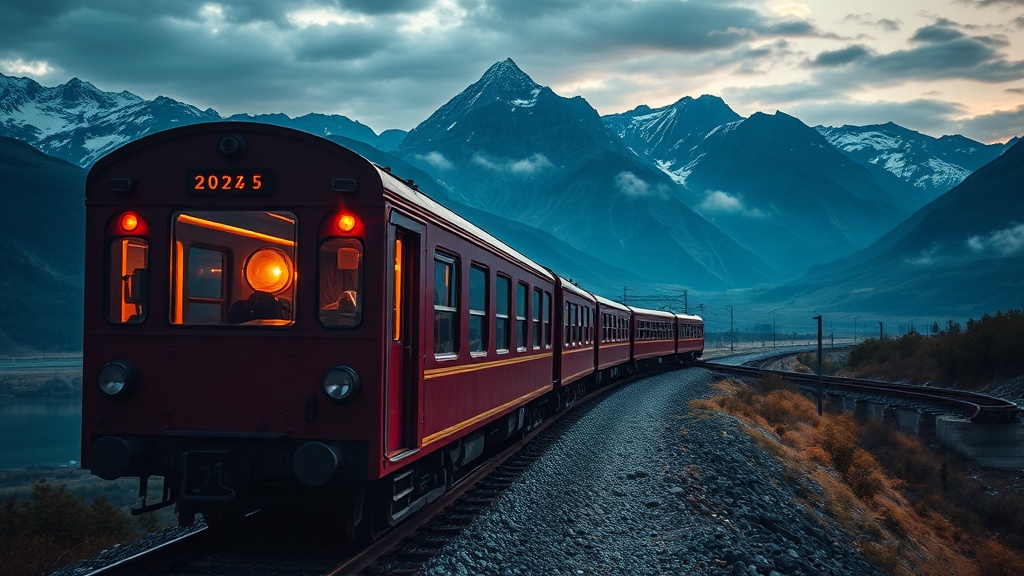
The Most Scenic Train Journeys in the World for 2025

What Are the Most Scenic Train Journeys in Europe for 2025?
The Bernina Express in Switzerland and Italy, the West Highland Line in Scotland, and Norway's Flåm Railway consistently rank as the top scenic train journeys in Europe for 2025. These routes deliver dramatic landscapes — glaciers, lochs, and fjords — without requiring a car or driving mountain roads yourself.
Here's the thing about European rail travel: you don't need to rough it. The Glacier Express connects Zermatt and St. Moritz across 291 bridges. It's slow — eight hours for 180 miles — but that's the point. You sip wine while the Matterhorn disappears behind pine forests. The carriages are plush, the meals are served at your seat, and every window frames a postcard.
Scotland's West Highland Line runs from Glasgow to Mallaig. You cross the Glenfinnan Viaduct (yes, the Harry Potter bridge). The scenery is raw, green, and occasionally drenched in rain. Bring a jacket. The single-track line hugs lochs and cuts through Rannoch Moor — one of the last wildernesses in Britain. Deer graze near the tracks. Eagles circle overhead.
Norway's Flåm Railway drops from mountain plateau to fjord in just 12 miles. It's one of the steepest in the world. Waterfalls thunder beside the tracks. In winter, the snow transforms the valley into something almost unreal. The train stops at Kjosfossen waterfall so passengers can step onto the platform and feel the spray. It's touristy. It's also unforgettable.
Which Train Route Offers the Best Views of the Swiss Alps?
The Bernina Express offers the most spectacular panoramic views of the Swiss Alps, crossing 196 bridges and the UNESCO-listed Brusio Spiral Bridge before descending into Tirano, Italy. No other route packs so many engineering marvels and alpine vistas into a single day.
The train features oversized windows and an open-air viewing platform in summer. You'll see Morteratsch Glacier, Lago Bianco's turquoise waters, and the Italian Alps fading into vineyard country. It's a four-hour path, though most travelers spend the full day exploring stops along the way. Poschiavo — an Italian-speaking village with stone houses and excellent pizzoccheri — deserves a lunch break.
That said, tickets aren't cheap. A standard seat from Chur to Tirano runs about €70 in peak season. The Swiss Travel Pass covers the route but requires a seat reservation (€14–€24). Book early — summer 2025 seats are already filling. If you're starting from Zurich, factor in the connecting regional train to Chur.
Want a less touristy alternative? The Gotthard Panorama Express links Lucerne with Lugano. It combines boat and rail through the original Gotthard tunnel route. The landscapes are softer — lakes rather than ice fields. You'll pass through the 9-mile Gotthard Tunnel, then emerge into Ticino's palm trees and gelato shops. It's Switzerland's most dramatic climate change in under an hour.
How Do Scenic Train Journeys in Asia and the Americas Compare?
Asia and the Americas offer scenic train journeys that match Europe for drama while delivering entirely different ecosystems — from Canadian Rockies to Japanese cedar forests and Peruvian cloud forests. The scale is often larger, the distances longer, and the cultural immersion deeper.
In Canada, the Rocky Mountaineer operates daylight-only routes between Vancouver and the Rocky Mountains. You don't sleep on the train — you stay in hotels. The glass-domed coaches are unmatched for wildlife spotting. Bears, elk, and ospreys are common sights. A two-day path starts around CAD $1,500. The First Passage to the West route retraces the historic Canadian Pacific line through Banff and Lake Louise.
Japan's Seven Stars in Kyushu is a luxury cruise train that loops through volcanic hot springs, coastal cliffs, and sake breweries. It's exclusive — only 30 passengers — and bookings open months ahead. For a more accessible option, the JR Pass lets you ride the Hokkaido Shinkansen and rural lines like the SL Fuyu-no-Shitsugen steam train across frozen wetlands. In autumn, the Resort Shirakami hugs the Sea of Japan through tunnels of crimson maple.
Peru's Belmond Hiram Bingham climbs from Cusco to Machu Picchu through the Sacred Valley. The scenery is staggering — rushing rivers, Inca terraces, and cloud forest. The train includes brunch, live music, and an observation car. It's pricey (around $500 one-way), but PeruRail's Vistadome offers similar views for a fraction of the cost. The catch? You'll share the Vistadome with more backpackers and fewer tuxedos.
Worth noting: Amtrak's Empire Builder crosses the northern United States from Chicago to Seattle or Portland. It's an affordable sleeper train — private rooms start around $400 — and you wake up to Glacier National Park. The dining car still serves real meals on china plates. It's old-school American rail at its finest.
| Route | Region | Duration | Best For | Price Range |
|---|---|---|---|---|
| Glacier Express | Switzerland | 8 hours | Alpine engineering & luxury | $180–$400 |
| Rocky Mountaineer | Canada | 2 days | Wildlife & glass-domed views | $1,100–$3,000+ |
| Bernina Express | Switzerland/Italy | 4 hours | UNESCO heritage & lakes | $80–$200 |
| Flåm Railway | Norway | 1 hour | Fjords & steep descents | $50–$100 |
| Empire Builder | USA | 46 hours | Budget sleeper & national parks | $150–$800 |
How Can You Plan a Scenic Train Trip Without Breaking the Bank?
You can cut costs by booking regional passes, traveling in shoulder season, and choosing standard seats over panoramic first-class cars without sacrificing the views. The scenery looks the same through every window.
Here's the thing about rail passes: they're not always the deal they appear. The Eurail Global Pass shines if you're covering multiple countries in two weeks. For a single scenic route? Point-to-point tickets are often cheaper. Use Trainline to compare fares across European operators. Early-booking discounts in Switzerland and Austria can slash prices by 50%.
Shoulder season — April to early June, September to October — delivers lower prices and emptier trains. The Alps still have snow in spring. Scotland's heather blooms in late August. You'll avoid the summer crowds and the peak surcharges. That said, some routes close entirely in winter. The White Pass & Yukon Route shuts down from October to May. Australia's The Ghan only runs its full north-south crossing during the dry season.
The catch? Some scenic routes don't run daily. The Bernina Express operates year-round but with fewer departures in winter. The Jacobite Steam Train (the Harry Potter train) only runs May through October. Always check the schedule before booking flights.
For accommodation, overnight trains save a hotel night. The ÖBB Nightjet runs sleeper routes across Austria, Germany, and Italy. A couchette costs less than a city-center hotel. You arrive refreshed — and you've slept through the boring bits. In Scandinavia, the SJ Night Train links Stockholm with Lapland. You fall asleep in Stockholm and wake up to reindeer and birch forests.
Another budget tip: mix luxury scenic routes with regional trains. Ride the Glacier Express one day, then take a standard SBB train across the same region the next. The views overlap. The price doesn't.
What Should You Pack for a Long-Distance Scenic Train path?
Pack layers, a portable charger, noise-canceling headphones, and a small day bag with snacks and water so you're not dependent on dining car schedules. Comfort matters more than fashion on a twelve-hour ride.
Trains can be surprisingly cold — even in summer. The Glacier Express cranks the AC. Scottish trains feel drafty. A merino wool base layer and a packable down jacket solve most temperature swings. You'll go from sweating on a sunny platform to shivering in an over-air-conditioned carriage within minutes.
Window glare is real. Polarized sunglasses help. So does a camera with a lens hood. Phone photographers should bring a clip-on polarizer. You'll want to capture the Bernina Pass without reflections.
Food varies wildly by route. The Rocky Mountaineer serves gourmet meals. Amtrak's dining car is hit-or-miss. Regional European trains might have nothing but a vending machine. A stash of nuts, chocolate, and a refillable water bottle keeps you from getting hangry at 10,000 feet.
Don't overpack. Storage space in sleeper compartments is tight — usually just a narrow shelf and under-bed clearance. A soft duffel beats a hard-shell suitcase every time. Keep valuables in a small crossbody bag that stays with you during station stops. Theft on trains is rare, but it happens — especially on busy commuter legs before the scenic section begins.
Scenic train travel isn't about getting somewhere fast. It's about surrendering to the rhythm of the rails. You read. You stare out the window. You talk to strangers (or don't). The path becomes the destination — and in 2025, there's no better way to see the world.