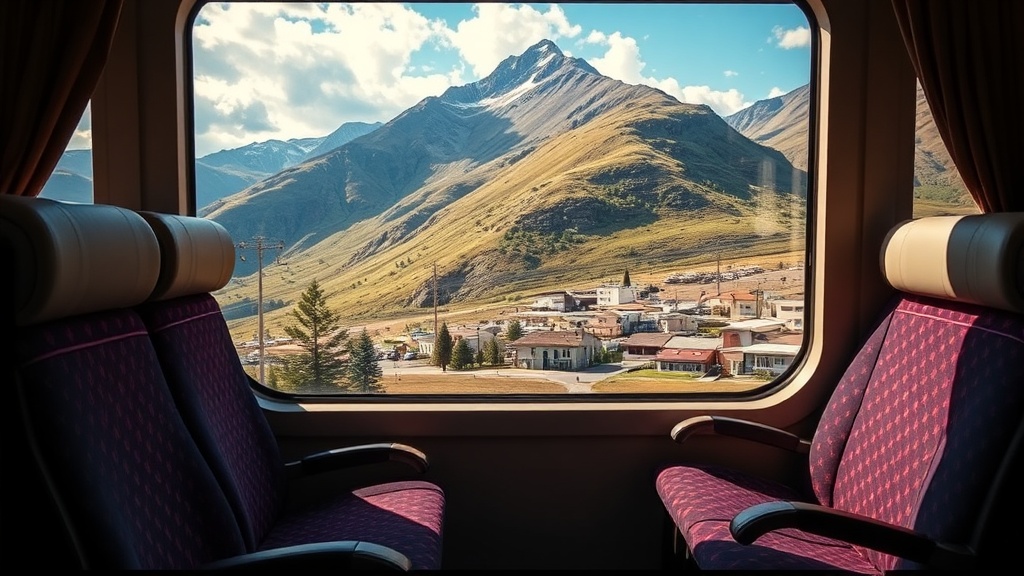
Selecting the Best Window Seat for Scenic Train Routes

What makes a window seat actually worth it?
This post covers exactly how to pick the best seat on a train when the view is the main reason you're traveling. You'll learn how to identify which side of the train offers the best scenery, how to avoid glare from the sun, and how to position yourself for the best photos. Choosing a seat based on the direction of travel isn't just a suggestion—it's the difference between staring at a dark tunnel wall and seeing the Swiss Alps.
When you're booking a long-distance rail trip, most booking engines show you a simple seat map. These maps tell you if a seat is by a window or an aisle, but they rarely tell you which direction that window faces. If you're traveling through the Rocky Mountains or along the coast of Amalfi, you want to be on the side that faces the mountains or the ocean, not the side facing the service tunnel. It's a small detail, but it changes the entire experience of your trip.
The first thing to consider is the sun. If you're traveling north-bound in the afternoon, the sun will be hitting the western side of the train. If you sit on that side, you'll likely spend the whole trip with the blind pulled down to avoid glare. A bright, beautiful view is useless if you're squinting through a shade. Always check the time of day and the cardinal direction of your route before you finalize that seat selection.
How do I know which side of the train to pick?
To figure this out, you need to look at a map of your route and determine if you're traveling North, South, East, or West. For example, if you're heading South from Vancouver toward the US border, the mountains will be to your East. If you want to see them, you need to sit on the left side of the train. If you're traveling West along the coast, the ocean will be on your left.
A great way to verify this is to use a tool like Google Maps to look at the topography of your path. If the mountains are to the right of the tracks, you want the right-hand side. It sounds simple, but many people realize too late that they've spent six hours looking at a field of wheat or a highway because they didn't check the orientation. If you're traveling on a high-speed rail line, remember that the train moves fast—you won't have much time to adjust your position once you're settled.
Will a window seat be a good spot for photography?
If you're a photographer, a window seat is a double-edged sword. On one hand, you have a front-row seat to the action. On the other, the glass can cause reflections and glare that ruin your shot. To get the best images, try to sit in a seat that isn't directly under a vertical pillar or a structural beam. These can block your line of sight and make it hard to get wide-angle shots.
- Watch for reflections: If it's a bright day, hold your lens as close to the glass as possible to minimize reflections from the cabin interior.
- Avoid the sun: If the sun is directly hitting your window, your camera sensor might struggle with the high contrast.
- Check the glass quality: Some older trains have scratched or dirty windows. If you're traveling on a budget line, the view might be obstructed by grime.
For high-end scenic routes like the Eurostar or similar luxury lines, the windows are usually much larger and cleaner. However, even on these routes, the angle of the sun remains your biggest enemy. If you're traveling through a valley, the light might be soft and perfect, but if you're on a high plateau, the light could be harsh and unforgiving.
Can I get a better view in a different class?
Class levels often dictate how much of the view you actually see. In economy or standard classes, you might be seated in a way that your view is frequently interrupted by the heads of other passengers. In premium or first-class carriages, the seating is often more spaced out, and the windows might be larger or even floor-to-ceiling.
| Class Type | View Potential | Pros | Cons |
|---|---|---|---|
| Economy/Standard | Moderate | Cheaper, more people | Limited view, more distractions |
| Premium/Business | High | More space, better angles | Higher cost, less frequent |
| First Class/Sleeper | Excellent | Uninterrupted, large windows | Most expensive |
If your primary goal is to see the scenery, spending a little extra for a premium seat is often worth it. In a sleeper car, you're also more likely to have a more private vantage point. You aren't just paying for the seat; you're paying for the lack of interruptions. If you're traveling through a particularly stunning stretch of coastline, that extra bit of space can make the difference between a frantic attempt to snap a photo and a relaxed, immersive experience.
One final tip: if you're traveling with a group, try to book seats that are together but allow for different viewing angles. If one person wants to see the mountains and the other wants to see the ocean (if the route curves), don't feel locked into a single row. Most modern booking systems allow you to see the layout of the car, so use that to your advantage. Look for the seats near the ends of the carriages—sometimes these have slightly different window configurations that offer a wider field of view.