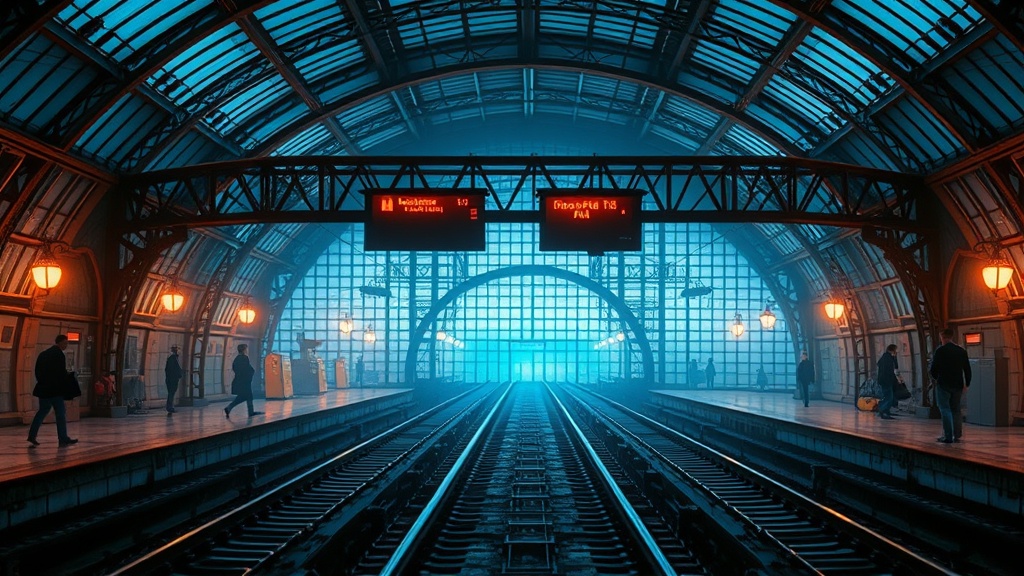
How to Discover Hidden Gems at Stations Most Travelers Skip

Most travelers treat train stations as mere transit points—places to rush through while checking departure boards and grabbing overpriced coffee. That's a mistake. The stations between your origin and destination often hide some of the most rewarding travel experiences you'll find, and learning to spot them transforms ordinary rail trips into adventures you'd never otherwise discover.
This isn't about forcing yourself off the train at every whistle stop. It's about developing an eye for places that deserve a pause—and knowing how to make the most of those pauses when they arise. Small stations, forgotten junctions, and regional hubs consistently surprise travelers who bother to look. A delayed connection in rural Austria once led me to a village bakery that had been making the same strudel recipe since 1823. A missed train in Scotland meant an unplanned afternoon in a coastal town I'd never have visited otherwise. These aren't accidents—they're opportunities that reveal themselves when you know what to look for.
What Makes a Small Station Worth Exploring?
The best stations to explore share certain qualities, though they rarely announce themselves with tourist signage or glossy brochures. Look for places where local life converges: markets set up near platforms, cyclists loading produce onto carriages, or retirees gathered on benches with newspapers and coffee. These signals matter more than any TripAdvisor listing.
Architectural heritage is another strong indicator. Many small stations were built during railway booms of the late 19th and early 20th centuries, when competition between rail companies produced remarkable buildings—art nouveau waiting rooms, stained glass canopies, ornate ironwork that rivals anything in major cities. The Settle-Carlisle line in England passes through stations like Dent and Ribblehead where Victorian engineering meets dramatic landscapes. You don't need a guidebook to appreciate this—you just need to step outside and look up.
Pay attention to the surrounding geography too. Stations positioned at river crossings, mountain passes, or coastal bluffs often indicate worthwhile terrain nearby. The train itself becomes your scouting tool, revealing valleys and viewpoints you'd never find from a highway. When you spot a promising landscape unfolding outside your window, check whether there's a return service later that day. Sometimes the detour costs nothing but time—and time is precisely what train travel gives you that flying cannot.
How Can You Research Stations Before Your Trip?
Effective research for small-station exploration differs from standard trip planning. You won't find much about these places in mainstream travel guides, and that's actually a good sign. Start with the route map itself. Most rail operators publish detailed line diagrams showing every stop, including request-only halts and freight-only sidings. Study these with patience—notice which stations serve as junctions between lines, which sit near labeled natural features, and which have unusually long platform configurations suggesting former importance.
Historical railway resources prove surprisingly useful here. Sites like Railway Gazette International and national heritage registers document station architecture and former service patterns. A station that once hosted express services but now sees only local trains often retains interesting buildings and may have a town that time passed by—preserving character that busier places lost decades ago.
Local Facebook groups and subreddits dedicated to specific rail lines yield honest intelligence that official sources miss. Regular commuters know which stations have reliable taxis, which platforms host food vendors on specific days, and which walking routes actually lead somewhere interesting. Post a question about a specific station on a regional forum and you'll typically receive detailed responses from people who've passed through hundreds of times.
Finally, examine timetable patterns with a detective's eye. Stations where services converge from multiple directions—where you could change between lines heading to different destinations—often developed as regional centers even if they never grew large. These junction towns frequently preserve commercial districts that served surrounding rural areas for generations, meaning independent shops, local restaurants, and intact main streets that vanished from highway-dependent communities.
What Should You Pack for Spontaneous Station Exploration?
The gear that enables small-station discovery differs from standard travel packing. You'll want a daypack that stays accessible—under your seat, not buried in luggage racks—containing basic exploration tools. Good walking shoes matter enormously; station platforms often lead directly to unpaved paths, cobbled streets, or trails that reward wandering.
Physical maps beat phones in these situations. Cell service disappears quickly outside major corridors, and station exploration often means leaving the platform area entirely. A detailed regional map—Ordnance Survey in Britain, Institut Géographique National in France—shows footpaths, elevation contours, and landmarks that Google Maps simply doesn't display. Mark your station on the map before disembarking so you can always find your way back.
Pack a basic language card or phrasebook if traveling where you don't speak the local language. Small stations rarely have multilingual signage or tourist information offices. Being able to ask "When is the next train to [destination]?" and understand the response prevents anxiety that might otherwise keep you on the train. Write down your intended return departure time in local format—24-hour clock in most of Europe, for instance—so you can confirm schedules without confusion.
Weather-appropriate layers matter because you'll be outside the climate-controlled train environment. Platform waiting rooms in small stations often lack heating or air conditioning. A packable rain shell and light insulation layer let you explore comfortably regardless of conditions. Similarly, carry water and a small snack; village shops near stations keep unpredictable hours, and you don't want hunger cutting short a promising exploration.
How Do You Handle Connections and Timing?
Timing separates successful station exploration from stressful mistakes. The golden rule: never disembark at a station where you cannot afford to miss the next train. Build buffer time deliberately—if your connection window exceeds 90 minutes, you have genuine exploration potential. Less than 60 minutes and you're restricted to the immediate platform area unless you enjoy sprinting.
Understand the service pattern before you step off. Some small stations see only three or four trains daily; missing one means hours of waiting or expensive taxi rides to the next stop. Others sit on busy commuter corridors where services run every twenty minutes. Check the schedule thoroughly—remember that weekend frequencies often differ dramatically from weekdays, and seasonal tourist services may not appear on standard timetables.
When you do disembark, note your platform number and the direction trains arrive from. Small stations sometimes have only one platform serving both directions; others have multiple platforms with unclear signage. Take a photo of the departure board showing your next train—screens sometimes malfunction, and having the time, platform, and destination recorded prevents confusion.
Consider the last-train risk carefully. If you're exploring late in the day, identify the final service to your destination and treat it as immovable. Missing the last train to a small town with no accommodation creates genuine problems. I learned this lesson in rural Spain, where an unexpected café closure and a delayed train combined to leave me negotiating with a restaurant owner for floor space. The adventure made a good story later; at the time, it was merely exhausting.
When Should You Skip the Stop and Stay on Board?
Discernment matters as much as curiosity. Some stations offer nothing worth your time, and recognizing them saves energy for better opportunities. Warning signs include: stations surrounded by parking lots with no visible town center, platforms located far from any buildings, industrial zones with no pedestrian access, or stops that exist purely for operational reasons (passing loops, signal boxes) rather than passenger demand.
Trust your instincts about safety too. Remote stations after dark, locations with no other passengers visible, or areas where you cannot determine a logical walking route—these are places to remain seated. The goal is discovery, not unnecessary risk. Daylight hours transform the same station from questionable to welcoming; plan your exploration accordingly.
Weather can also override your plans. Torrential rain, extreme heat, or icy conditions make platform-side wandering unpleasant and potentially dangerous. Some stations have covered areas or adjacent buildings where you can wait comfortably; others leave you fully exposed. Check the forecast before committing to a mid-journey exploration, and don't hesitate to continue onward if conditions turn.
The best travelers balance spontaneity with judgment. Each small station represents a question: does this place deserve my attention right now? Sometimes the answer is no—and that's fine. The train continues, and other opportunities await further down the line. The skill lies in recognizing yes when it appears, and having the preparation to act on it.