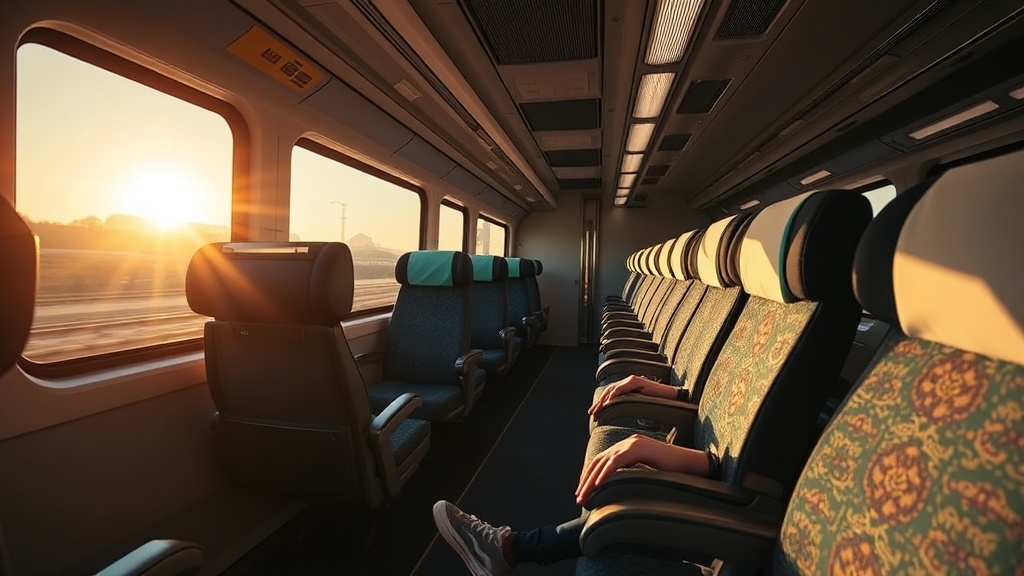
How to Choose the Best Seat for Long-Distance Rail Travel

Are you worried about being stuck in a cramped seat for twelve hours next to a noisy service trolley? Choosing where you sit on a long-distance train isn't just about preference; it's about how much you'll actually enjoy the trip. This guide covers everything from seat positioning relative to the engine to selecting the right cabin layout for your specific needs. Whether you're traveling through the Alps or crossing the Canadian Rockies, understanding the layout of your carriage can make or break your experience.
Where is the quietest part of the train located?
If you're looking for peace and quiet, you need to look at the physical layout of the train. Most long-distance rail cars have specific zones that are naturally quieter than others. Generally, the middle of the train is your best bet. Why? Because the ends of the cars are often subject to more vibration and noise from the coupling mechanisms between cars. If you're traveling in a sleeper car, the middle sections tend to be more stable, whereas the ends might feel a bit more jerky when the train hits curves or switches tracks.
Another factor is the proximity to the service areas. Most long-distance trains have a cafe car or a dining car. If you sit in the car directly adjacent to the dining car, you'll hear the clatter of dishes and the chatter of people waiting for their meals. To avoid this, try to secure a seat at least two cars away from the food service area. You'll still have access to the snacks, but the constant foot traffic and noise from the galley won't be right next to your ear. If you're a light sleeper, this distinction is vital.
Should I book a window seat or an aisle seat?
This is the classic debate among frequent rail travelers. The choice depends entirely on your priority: views or freedom. If you are traveling through a scenic route—like the Glacier Express in Switzerland—a window seat is non-negotiable. You'll want that unobstructed view of the mountains and valleys. However, keep in mind that window seats can sometimes feel a bit more confined, and you have to ask a stranger to move if you want to get up and stretch your legs.
On the other hand, the aisle seat offers more mobility. If you're someone who needs to move frequently to avoid stiffness, the aisle is your friend. You can step out into the corridor without bothering anyone. However, there's a downside: you're more likely to be bumped by people walking through the carriage or by the trolley service. For more detailed advice on seating layouts, you might want to check out the official Eurail documentation regarding different train types, as layouts vary wildly between high-speed and long-distance models.
| Seat Type | Best For... | Main Drawback |
|---|---|---|
| Window | Scenic views and stability | Limited movement |
| Aisle | Easy access and leg stretching | Frequent interruptions |
| Middle Car | Quiet and smooth ride | Further from amenities |
| End Car | Quick exit at stops | More noise and vibration |
How do I find the most comfortable seat for sleeping?
When you're traveling overnight, the goal shifts from visibility to comfort. If you've booked a seat rather than a berth, you'll want to look for seats with more recline capabilities. Most long-distance trains have different classes, and the premium classes almost always offer much better reclining angles. If you are stuck in a standard seat, try to find a spot where the seat is not directly under an overhead luggage rack or a vent, as these can be noisy or even slightly drafty during the night.
If you are in a sleeper compartment, the orientation of the bed matters. In many European and North American trains, the beds are positioned along the side of the car. If the train is traveling through a particularly windy or mountainous region, you might feel more motion if you're lying perpendicular to the direction of travel. To get a better sense of the amenities available for your specific route, you can often check the Amtrak website for specific car descriptions and seating configurations.
Don't forget about the lighting. In many sleeper-style cars, the light from the hallway can bleed into your area. If you're a light sleeper, look for seats that are slightly recessed or have more substantial partitions. This isn't just about physical comfort; it's about managing your environment. A good set of earplugs and an eye mask can help, but choosing the right seat is your first line of defense against a restless night.
Finally, consider the direction of travel. In some trains, the direction of the seat can change based on the direction the train is moving. If you're traveling in a way that makes you feel slightly nauseous, try to secure a seat that faces forward. Traveling backward can sometimes feel more disorienting during high-speed segments or when the train is winding through mountain passes. It's a small detail, but it can prevent a lot of discomfort.